Schneider Electric’s acquisition of the remaining shares of AVEVA closed in 2024, ending AVEVA’s run as a separately listed company and folding it fully into Schneider’s corporate structure. That part of the story is old news. What’s new in 2026 is that the practical consequences are no longer theoretical. Account teams are now presenting unified roadmap decks. Contract renewals are surfacing new bundling language. Product pages are quietly changing names. If you run AVEVA MES, AVEVA PI System, or you’re evaluating Schneider’s EcoStruxure Plant Advisor or Machine Advisor products, this is the year the ownership change stops being a press-release footnote and starts being something you have to plan around.
The core tension for practitioners is straightforward: AVEVA’s software portfolio and Schneider’s EcoStruxure architecture were built by different engineering organizations, sold through different channels, and in many cases designed to solve overlapping problems in different ways. Full ownership removes the corporate-governance uncertainty that existed when AVEVA was majority-owned but independently traded. It does not, by itself, tell you which product survives when two roadmaps overlap, which licensing model wins, or how long dual-track support continues for the product you already own.
What’s genuinely converging
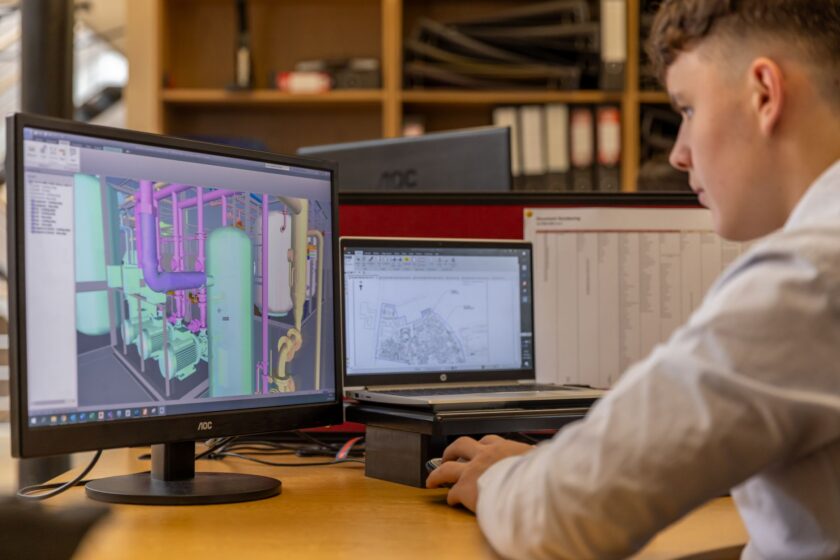
Schneider has been explicit that AVEVA’s software business sits inside the EcoStruxure umbrella as its industrial software layer, and the branding has been shifting accordingly. AVEVA’s PI System — still the dominant historian and real-time data infrastructure layer in process industries — is being positioned as core data infrastructure feeding both AVEVA-branded analytics and Schneider’s EcoStruxure advisor-class applications. That’s a sensible convergence point: PI System’s install base is enormous, the OSIsoft-to-AVEVA integration already proved out years ago, and there’s no realistic scenario where Schneider walks away from that data layer.
On the applications side, EcoStruxure Machine Advisor and EcoStruxure Plant Advisor occupy space that overlaps meaningfully with AVEVA’s MES and operations management offerings — production tracking, downtime and OEE analysis, machine-level performance monitoring. Where Schneider has articulated a direction, it’s toward a layered architecture: EcoStruxure as the overall platform and edge-to-cloud story, AVEVA’s MES, historian, and operations software as the deeper industrial-software capability inside that story, with connective tissue built through common data models and increasing use of open standards like OPC UA for interoperability between the two product families.
That’s the optimistic, vendor-stated version, and it’s plausible. Large industrial software portfolios do get rationalized this way over multi-year cycles. But “plausible direction” and “committed roadmap with a support timeline” are two different things, and the gap between them is exactly where MES buyers get exposed.
What’s still separately licensed roadmap risk
Here’s the part account teams tend to gloss over in the unified-vision slide. AVEVA MES (built on the legacy Wonderware/MES and, in places, the former GE Digital Proficy lineage AVEVA absorbed years earlier) and EcoStruxure’s advisor applications were not built on a shared codebase, and there is no publicly committed single-platform end state where one absorbs the other on a fixed date. Overlap doesn’t automatically mean consolidation, and even where consolidation is the eventual direction, “eventual” in enterprise software often means a multi-year window with parallel support, not a clean cutover.
That parallel-support window is where you have real financial and operational exposure: a product you’re on can be quietly moved to sustaining/maintenance mode — patches and security fixes, but no meaningful new feature investment — while sales attention and engineering resources shift to the product Schneider wants you to migrate to next. That’s not misconduct, it’s completely normal post-acquisition portfolio management. It’s also the single most common way MES customers get blindsided at renewal.
Licensing is the other pressure point
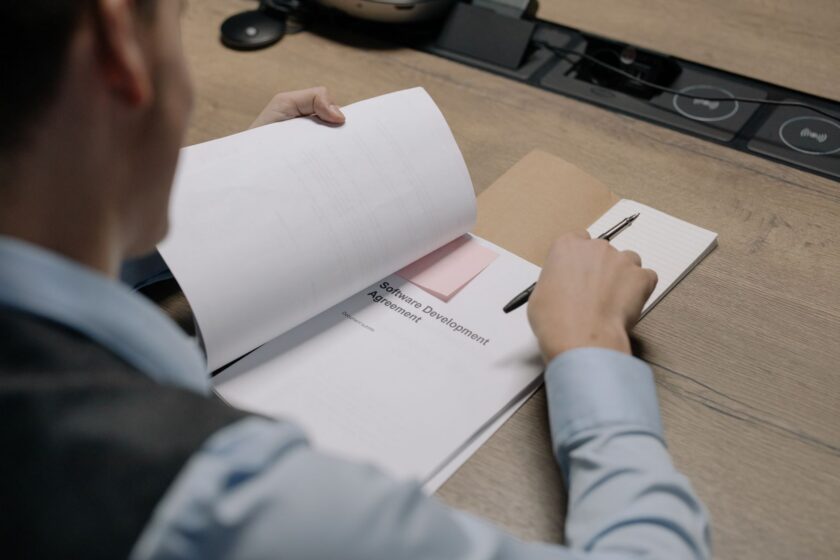
Schneider and AVEVA have historically run different licensing philosophies — AVEVA moved a large part of its portfolio toward subscription and consumption-based models over recent years, while Schneider’s broader EcoStruxure commercial structure blends hardware, software, and services in bundled ways. As the two commercial teams merge, expect renewal quotes to look different than your last contract cycle, sometimes structurally, not just in price. If your current AVEVA MES agreement predates the close, don’t assume your next renewal rides on the same terms by default. Ask.
A checklist for your next account review
Before you sign anything or let a renewal auto-roll, push your account team on specifics rather than direction:
- Get the support end date in writing. Not “long-term commitment” — an actual mainstream support date for the specific product and version you’re running, and what the extended-support terms look like after that.
- Ask what “convergence” means for your module. If you’re on AVEVA MES and being shown EcoStruxure Plant Advisor in the same deck, ask directly whether that’s additive (new capability alongside your MES) or a signal that MES functionality is migrating there over time.
- Confirm the data model and integration path, not just the marketing diagram. If PI System is your historian, ask exactly how it connects to whatever advisor-tier application you’re being sold — is it native, is it via OPC UA, is it a connector still in development?
- Separate the licensing conversation from the roadmap conversation. Sales teams have every incentive to bundle a roadmap pitch with a commercial pitch. Get the licensing terms — term length, consumption metrics, price protection — evaluated on their own merits.
- Ask who owns your account technically, not just commercially. Post-merger reorganizations routinely reassign technical account managers and solution architects. Know who actually answers support tickets six months from now.
- Get any verbal roadmap commitment attached to the contract or in a documented communication. “We’re not planning to sunset that” said in a meeting is not a support commitment. If it matters to your capital planning, get it in writing.
The practical read for plant IT and controls teams
None of this means AVEVA MES or PI System customers should panic or start evaluating alternative platforms reflexively. Full ownership consolidation is, in most respects, a stabilizing event — it removes the will-they-won’t-they uncertainty of a partial acquisition and gives Schneider a freer hand to invest in integration rather than managing a minority shareholder base. The realistic risk isn’t abandonment; it’s the ordinary, well-documented pattern of large software portfolios where overlapping products get slowly deprioritized in favor of a strategic direction, and customers who didn’t ask hard questions find out at the worst possible time — mid-project, mid-budget-cycle, or during a plant expansion that assumed continuity.
The move for 2026 is simple: treat this year’s renewal cycle as the moment to get specific commitments on paper, not the moment to accept a roadmap slide as a substitute for one.
This article was written with the assistance of artificial intelligence. While we aim for accuracy, the information may be incomplete, out of date, or incorrect, and should be independently verified before you rely on it for any decision. It is provided for general information only and does not constitute professional advice.